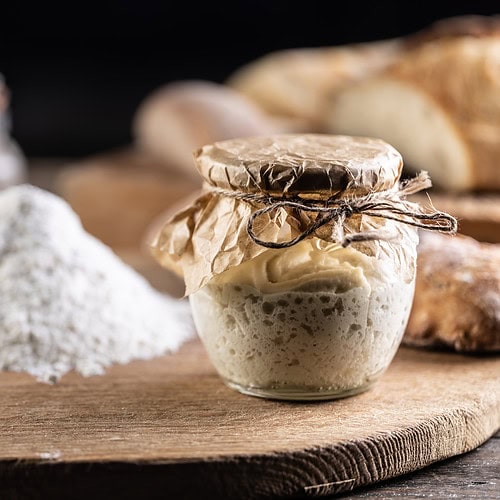
Easy Sourdough Starter Recipe
Learn how to make a sourdough starter from scratch with this beginner-friendly step-by-step guide. You’ll be baking like a pro in no time!
Servings: 1 serving
Calories: 400kcal
Cost: $1.00
Equipment
- 1 quart mason jar
Ingredients
- 120 grams (1 cup) whole wheat or rye flour (Day 1, then switch to all-purpose after)
- 120 grams (½ cup) filtered water (Do NOT use tap water! Chlorine and chloramine, chemicals used to disinfect tap water, can kill the beneficial yeast and bacteria in a sourdough starter.)
- all purpose flour (for feeding the starter Day 2-7)
Instructions
Day 1
- Mix flour and water in a clean jar until no dry bits remain.120 grams (1 cup) whole wheat or rye flour, 120 grams (½ cup) filtered water
- Cover loosely with a paper towel or cloth and let sit at room temperature (around 70–75°F).
Day 2-7
- Discard half of the starter (about 120 g).
- Add 120 grams of fresh flour and 120 grams of filtered water. Mix well, cover loosely, and let sit.all purpose flour , 120 grams (½ cup) filtered water
- Repeat every 24 hours, switching to all-purpose flour after Day 1.
- By Day 5–7, your sourdough starter should be bubbly, active, and ready to bake in your first loaf of bread!
Notes
Feeding a Sourdough Starter - Once your starter is established, it needs regular feedings to stay healthy:
- At room temperature (daily baking): Feed once every 24 hours.
- In the refrigerator (occasional baking): Feed once a week. Remove from the fridge, discard half, feed as usual, and let it become active before baking.
- On the counter: Perfect if you bake daily or every few days. Just feed it daily to keep it active.
- In the fridge: Best for occasional bakers. Feed once a week and revive with a few room-temperature feedings before baking.
Nutrition
Serving: 1serving (entire recipe) | Calories: 400kcal | Carbohydrates: 88g | Protein: 12g | Fat: 0g | Saturated Fat: 0g | Polyunsaturated Fat: 0g | Monounsaturated Fat: 0g | Trans Fat: 0g | Cholesterol: 0mg | Sodium: 0mg | Potassium: 0mg | Fiber: 0g | Sugar: 0g | Vitamin A: 0IU | Vitamin C: 0mg | Calcium: 0mg | Iron: 0mg
